

Dental Implants in Surprise & Verrado – Replacing Missing Teeth & Restoring Your Smile
Dental Implants Overview:
-
- What Are Dental Implants?
- The Surgical Procedure
- How Long Does Swelling Last After a Dental Implant and Bone Graft?
- Dental Implant Failure
- Surgical Advances
- Who actually performs the implant placement?
- How many teeth can be replaced by implants?
- Why Select Dental Implants Over More Traditional Types Of Restorations?
- Are You A Candidate For Implants?
- Dental Implant FAQs
>> Request A Consultation
>> After Placement of Dental Implants
Dental implants are changing the way people live. They are literally the best thing that has happened to our patients over the last 30 years. They are designed to provide a foundation for replacement teeth that look, feel, and function like natural teeth. The person who has lost teeth regains the ability to eat virtually anything, the teeth appear natural and that facial contours will be preserved. Patients with dental implants can smile, laugh, and live with a renewed confidence.
Restore your smile with dental implants!
Contact us today to schedule your consultation and take the first step towards a confident smile with dental implants!
What are dental implants?
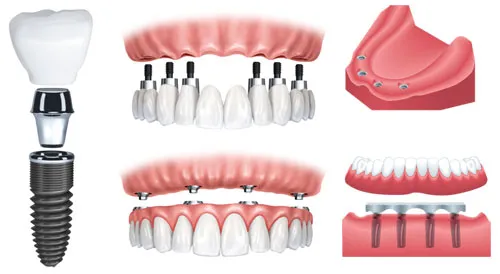
Dental implants are a part of dentistry that will forever change your life. The implants themselves are small titanium posts that are surgically placed into the jawbone where teeth are missing. These titanium anchors act as artificial roots. The bone bonds with the titanium, creating a strong foundation for artificial teeth. Titanium is biocompatible with your body, meaning that your body is not going to see it as foreign. This is one of the reasons why implants are so successful.
Once the bone has integrated with the implant, a crown or denture can be placed on top of the implant. Traditionally, the integration process took 3-6 months. However, with the advancements in dental implant technology, this time has decreased. In fact, we often place a temporary crown/denture on the implants the same day they are placed.
Implants also help preserve facial structure and prevent bone deterioration that occurs when teeth are missing. When teeth are lost, the bone in this area starts to melt away. Over time, severe bone loss can occur, resulting in both functional and esthetic problems. Dental implants can help preserve bone that would otherwise be lost. They are a wonderful way to restore youthfulness, including the ability to smile and eat with confidence. In some patients, they help restore facial youthfulness that can be lost with age as teeth are lost.
The Dental Implant Surgical Procedure
How are dental implants placed?
Most of our patients find that placement of a dental implant is far easier than having a tooth extracted. The procedure can be done with local anesthesia or intravenous sedation. Dr. Hammond and his team will discuss your case with you, including available anesthesia options, before you receive any treatment.
Many patients are concerned about being without teeth during the healing phase of dental implant treatment. Nothing can be further from the truth! We will coordinate a temporary restoration for you so you will leave with teeth during the healing process.
How long do dental implants take to place?
It depends on how many implants are placed, but with new technologies and surgical guides, the procedure takes less time than ever. It can take between 30 and 90 minutes to place a single implant, and 2 to 3 hours or more to place multiple implants. Dr. Hammond will discuss the length of surgery for your situation at your consultation.
How Long Does Swelling Last After a Dental Implant and Bone Graft?
Swelling around the mouth, cheeks, eyes, and sides of the face is common. This is the body’s normal reaction to surgery and eventual repair. The swelling will not become apparent until the day following surgery. It will not reach its maximum until 2-3 days post-operatively. If swelling or jaw stiffness has persisted for several days, there is no cause for alarm. This is a normal reaction to surgery. For more detailed information on what to expect regarding swelling and how to minimize it, please visit our page on what to do after dental implant placement.
Who actually performs the implant placement?
At Northwest Valley Oral Maxillofacial & Facial Cosmetic Surgery, your implant will be placed by Dr. Hammond, a board-certified oral and maxillofacial surgeon. To ensure you obtain the best result, your case will be a team effort between Dr. Hammond and your restorative dentist. As a dental implant specialist in Surprise, Dr. Hammond has placed over 3,000 implants, ensuring you receive expert surgical care. When the implant is restored, you will receive expert care from your restorative dentist. Both doctors will be doing what they do best, and as a result, you are receiving the highest level of care possible.
Restore your smile with dental implants!
Contact us today to schedule your consultation and take the first step towards a confident smile
Understanding Late Implant Failure
Dental implants have an excellent track record, but like any treatment, problems can occasionally develop. Understanding the difference between early and late implant failure helps you know what to look for and when to reach out for help.
- Early failure happens before the implant has bonded with the bone. This bonding process is called osseointegration. If the implant does not fully join with the bone, it may feel loose or uncomfortable soon after placement.
- Late implant failure occurs after the implant has already healed and been functioning for months or even years. Because the implant was successful at first, late failure can seem surprising, but it usually has identifiable causes that can be managed when caught early.
Common Causes of Late Implant Failure
Bite imbalance: Excess pressure on an implant from misfitting teeth can strain the bone and surrounding tissues. Over time, this repeated stress may weaken the support around the implant.
Infection: Peri-implantitis is one of the most common issues. It’s an infection in the gum and bone around the implant. It often begins with inflammation and can progress to bone loss if left untreated.
Bone loss: Changes in the jawbone can occur gradually. Bone may shrink if gum disease develops, if the bite places excessive force on one area, or if general oral health declines. When bone support diminishes, the implant may loosen.
Medical conditions: Health issues such as uncontrolled diabetes, autoimmune disorders, or habits like smoking can interfere with the body’s ability to maintain healthy bone and gum tissue. These factors may increase the likelihood of late complications.
Poor oral hygiene: Plaque buildup around an implant can irritate the gums and lead to infection. Even though the implant itself cannot decay, the surrounding tissues are still vulnerable. Daily home care and regular professional cleanings play a key role in keeping implants stable in the long term.
If you have an established implant and notice swelling, bleeding, discomfort, or any movement around the area, it’s a good idea to have it checked. Early attention helps protect your oral health and allows us to address potential implant failure before it becomes irreversible.
How many teeth can be replaced by implants?
Dental implants can be utilized to replace one tooth, several teeth, or all of your teeth, depending on your needs. Dr. Hammond and his surgical team will discuss all options that fit your particular situation.
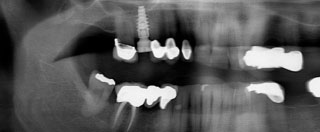
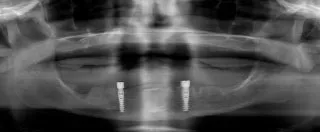
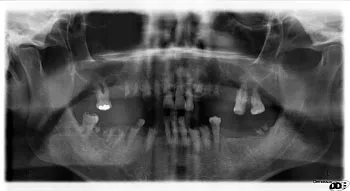
Before
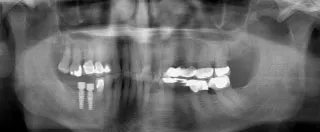
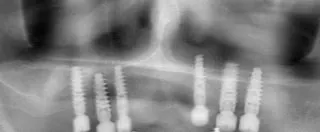
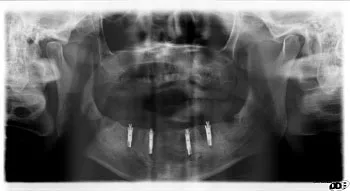
After Removal of Teeth, Placement of Implants, & Placement of the Prosthesis on the Same Day
Why Select Dental Implants Over More Traditional Restorations?
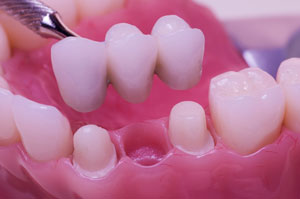
Dental implants are the #1 solution for missing teeth. In traditional restorations, such as a bridge, the enamel on the adjacent teeth is removed, and these teeth are reduced to make enough room for a cap.
Over time, the adjacent teeth may become compromised with leaking margins and recurrent decay, and these teeth can also be lost. So if you are replacing one tooth with a three-unit bridge, two perfectly good teeth can be put at risk. In essence, by doing a bridge instead of a dental implant, you are making a one-tooth problem a three-tooth problem.
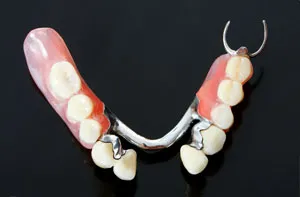
Sometimes, partial dentures are utilized to replace missing teeth. These are removable dentures that replace one or several teeth.
They are frequently uncomfortable and bothersome to the patient and have been nicknamed “pocket partials” because they end up in the patient’s pocket instead of the mouth and are often used only when a socially embarrassing situation arises. Dental implants eliminate these awkward moments by giving you fixed teeth that do not come out. They function and look like your own teeth!
When a patient is missing all their teeth, they are often reconstructed with “traditional” dentures.
Traditional dentures reduce the ability to chew food by 75% in comparison to natural teeth. They frequently move around and cause ulcerations and pain. Also, once the teeth are removed, the problem is compounded by bone loss, which requires new dentures every 5-10 years. Many people deal with loose dentures by using denture adhesives, which is a multi-billion-dollar business in the United States. These adhesives are messy, and most patients use them out of desperation. All of these problems can be solved with implant-supported dentures. 2-4 implants can be placed in the upper or lower jaw to secure a denture, which results in significantly improved chewing ability and renewed confidence to smile and eat.
Are You A Candidate For Implants?
If you are missing teeth, you’re a candidate for dental implants near you. Dr. Hammond will examine your mouth thoroughly and review your medical and dental history. If your mouth is not ideal for implants, there are ways of improving the outcome. Things such as bone grafting or zygomatic implants may be recommended. If you’ve ever been told that you are not a good candidate for dental implants, come and see Dr. Hammond, who has been extensively trained in the placement of dental implants with advanced bone loss.
Surgical Advances and Technology
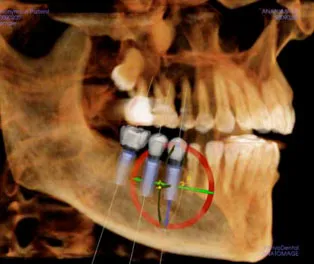
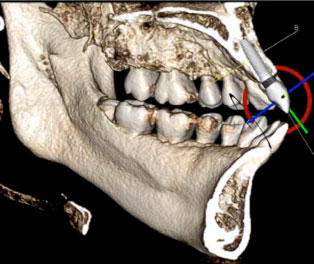
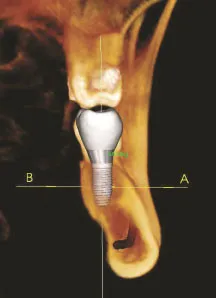
CT-guided dental implant surgery is extremely accurate and reduces surgical time, thus making the procedure more comfortable. It is the highest level of care available today in dental implant care. Using three-dimensional (3D) views of your jaw can help Dr. Hammond plan your surgery using specialized software. Custom surgical guides are made from this information and guide the placement of the implant during surgery. Vital structures such as nerves, sinuses, and adjacent teeth can be visualized using a three-dimensional scan, creating a much higher margin of safety and allowing the procedure to be completed in a shorter time.
CT-guided surgery often allows dental implants to be placed and the teeth to be placed on the same day. This is frequently called “Teeth in a Day.” People can walk in with decayed and broken-down teeth and walk out with beautiful new implant-retained teeth.
Frequently Asked Questions on Dental Implants
How long does swelling last after a dental implant and bone graft?
Swelling typically peaks around day three and can last up to two weeks. If you continue to have swelling for three weeks or more, contact our office for advice.
How can I prevent dental implant failure?
Carefully following your post-operative care instructions is the most effective way to avoid short-term dental implant failure. In the long term, proper oral hygiene, including brushing, flossing, and regular dental checkups, is crucial. If you are a smoker, quit. Smoking is one of the biggest contributing factors to implant failure.
What’s the recovery time for dental implant surgery?
Initial recovery from the surgery takes 1 to 2 weeks, after which you will feel normal and be able to go about your normal activities. However, the implants continue to osseointegrate with the surrounding bone for 3 to 6 months beneath the surface. This phase of healing does not interfere with daily life but creates a strong, stable foundation for permanent dental restorations.